
Table of Contents
If you’ve ever looked at a roof covered in solar and wondered: how do solar PV panels generate electricity?, you’re not alone.
For many businesses we speak to, especially maintenance managers, the interest is there… but the science behind it can feel a bit unclear.
The good news is that the process itself is actually quite straightforward. Once you understand the basics, it becomes much easier to see how a Solar PV Panel system can work for your building.
In this guide, we’ll break it down step by step, from sunlight hitting the panels right through to powering your equipment.
First, What Is Solar PV?
Before getting into the details, it helps to understand what “PV” actually means.
Solar PV stands for “photovoltaic,” which is simply the process of converting light into electricity
So when we talk about a panel solar PV system, we’re talking about equipment designed specifically to turn daylight into usable electrical power.
Step 1 – Sunlight Hits the Solar Panels
Everything starts with sunlight. Sunlight is made up of tiny particles called photons, packets of energy that travel from the sun to Earth.
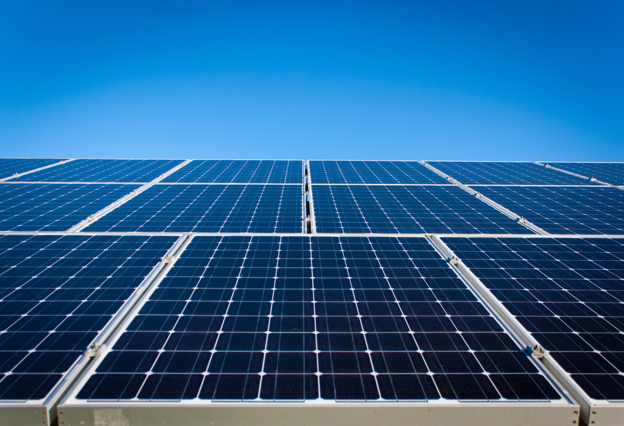
When these photons land on your solar panels, they hit the surface of the solar cells inside. These cells are usually made from silicon, which is a material that can conduct electricity under the right conditions.
At this stage, no electricity has been created yet, but the process has begun.
Step 2 – The Photovoltaic Effect (Where the Magic Happens)
This is the key part of the answer to how solar PV panels generate electricity.
When photons hit the silicon cells, they transfer their energy to electrons within the material.
This energy causes the electrons to break free from their atoms, turning them into free-moving charged particles. This process is called the photovoltaic effect.
In simple terms:
- Light energy is converted into electrical energy
- Electrons start moving, which is the basis of electricity
No moving parts. No fuel. Just sunlight doing the work.
Step 3 – Creating an Electric Current (DC Power)
Once those electrons are free to move, the solar cell is designed to guide them in one direction.
Inside each solar cell, there’s a built-in electric field created by two layers of silicon with slightly different properties. This electric field pushes the electrons along a pathway, creating a flow of electricity. This flow is known as Direct Current (DC) electricity.
So at this point, your panel solar PV system is actively generating power, but it’s not quite ready to be used in your building yet.
Step 4 – Converting DC into Usable Power (AC)
Here’s where another key component comes in: the inverter.
Most commercial buildings, equipment, and the national grid all run on Alternating Current (AC), not DC. That’s why your system includes an inverter, which:
- Takes the DC electricity from your panels
- Converts it into AC electricity
- Matches it to the correct voltage and frequency for your building
This conversion is essential because without it, the electricity generated wouldn’t be usable for your day-to-day operations.
Once converted, the power is ready to be used across your site.
Step 5 – Powering Your Building (or Exporting to the Grid)
After conversion, the electricity flows into your building’s electrical system.
From here, it can:
- Power lighting, machinery, offices, and equipment
- Reduce the amount of electricity you draw from the grid
- Be exported if you generate more than you need
Commercial buildings are particularly well suited to solar because energy demand often aligns with daylight hours, when your system is producing the most power.
Why This Matters for Commercial Sites?
Understanding how do solar PV panels generate electricity isn’t just about the science; it’s about what it means in practice.
For a maintenance manager, this translates to:
- Reliable daytime generation: Solar works best when your building is most active, during working hours.
- Reduced grid dependency: A well-designed system can offset a significant portion of your electricity use.
- Straightforward technology: There are no moving parts in the panels themselves, meaning lower maintenance compared to many other systems.
- Scalable solutions: Commercial Solar PV Panel Solutions can be tailored to your roof space, energy use, and future plans.
Bringing It All Together
To summarise the full process:
- Sunlight (photons) hits the solar panels
- Silicon cells absorb the energy
- Electrons break free, creating a current
- The system produces DC electricity
- An inverter converts it into AC electricity
- Your building uses the power, or exports any surplus
That’s the complete journey from sunlight to usable electricity.
Thinking About Solar for Your Site?
If you’re responsible for keeping a commercial building running efficiently, solar is worth considering, not just as a sustainability measure, but as part of your long-term energy strategy.
At JJ Electrical Solutions Ltd, we design and install Commercial Solar PV Panel Solutions that are tailored to your building, your usage, and your goals, without overcomplicating things.
If you’d like to explore what solar could look like for your site, you can get in touch with our team. We’re always happy to have a straightforward conversation and point you in the right direction.
Image Source: Canva